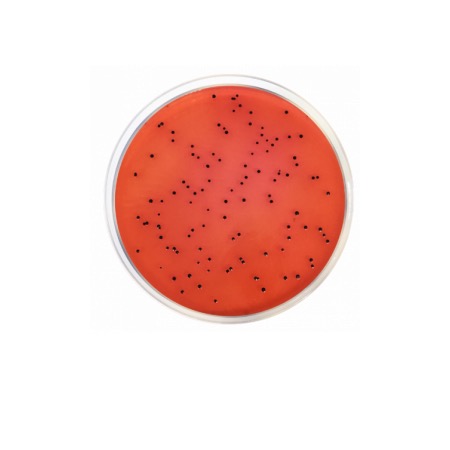
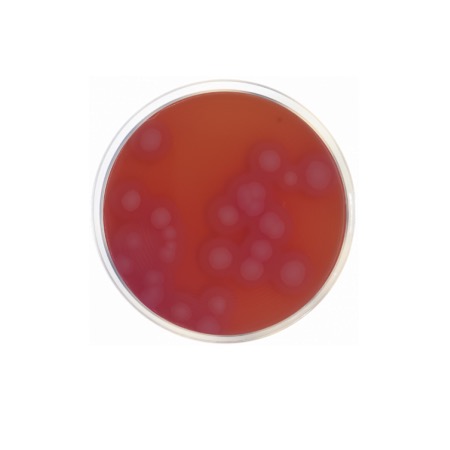
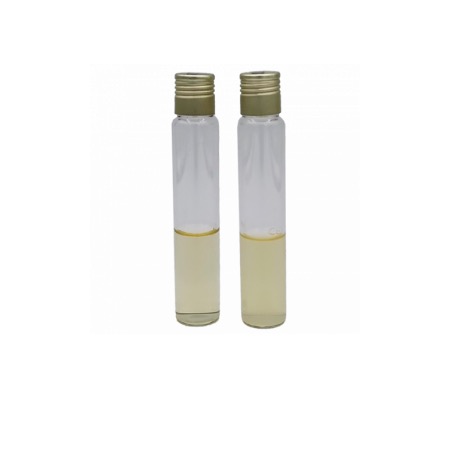
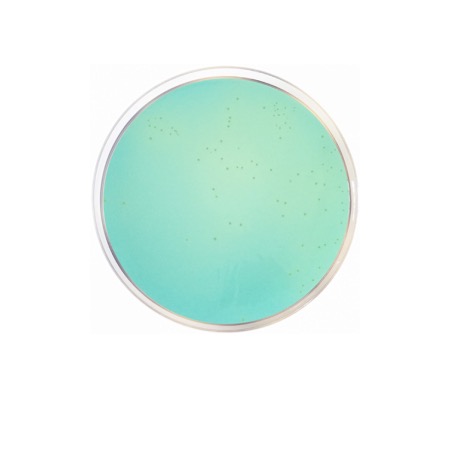
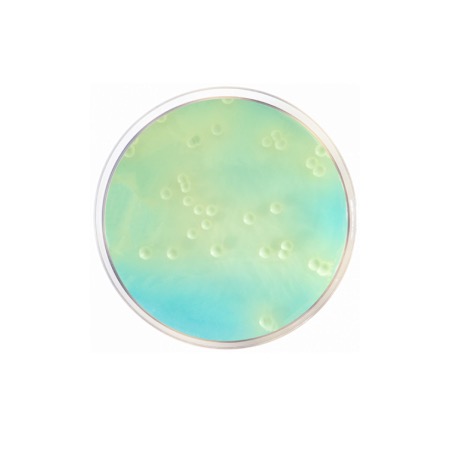
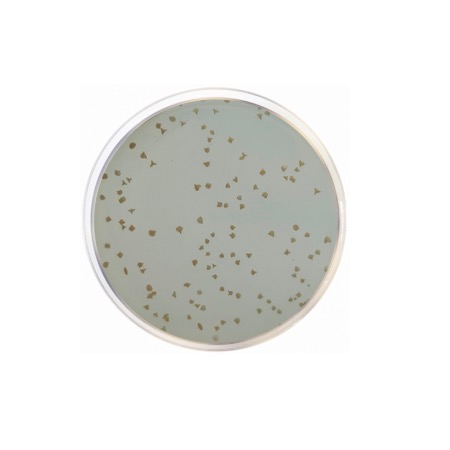
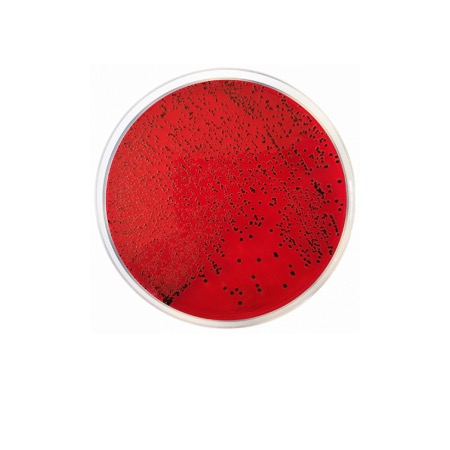
XLD Agar ISO is designed to allow the growth of Salmonella while providing clear visual differentiation from other enteric bacteria. The medium utilizes Xylose as a primary fermentable sugar; because most enteric bacteria (except Shigella) ferment xylose, they produce acid and turn the medium yellow. However, Salmonella species subsequently decarboxylate the L-Lysine, which increases the pH and reverts the colony and surrounding medium to a red color. The selectivity is achieved through Sodium Deoxycholate, which inhibits the growth of Gram-positive flora. To further differentiate Salmonella, Sodium Thiosulfate and Ferric Ammonium Citrate are included to detect the production of hydrogen sulfide (H₂S), resulting in colonies with characteristic black centers. Phenol Red serves as the pH indicator for the fermentation and decarboxylation reactions.
Advantages
- ISO 6579 Compliance: Formulated specifically to meet international standards for the horizontal method of Salmonella detection.
- High Diagnostic Accuracy: The combination of xylose fermentation, lysine decarboxylation, and H₂S production provides a high level of presumptive identification.
- Balanced Selectivity: Effectively inhibits Gram-positive bacteria and suppresses many non-target Enterobacteriaceae without being overly toxic to Salmonella.
- Clear Visual Contrast: Red colonies with black centers are easily distinguished from yellow, acid-producing coliforms.
- Industry Standard: Widely used in food quality control, veterinary diagnostics, and environmental monitoring for pathogenic enteric bacteria.
Technical specifications
| Catalogue number |
1274 |
| Brand |
Condalab |
| Application |
Isolation of Salmonella according to ISO 6579 |
| Typical Composition (g/L) |
Xylose (3.75); L-Lysine (5.0); Lactose (7.5); Sucrose (7.5); Sodium Chloride (5.0); Yeast Extract (3.0); Sodium Deoxycholate (1.0); Sodium Thiosulfate (6.8); Ferric Ammonium Citrate (0.8); Phenol Red (0.08); Bacteriological Agar (13.5) |
| Final pH (at 25 °C) |
7.4 ± 0.2 |
| Preparation |
54.27 g/L |
| Storage Temperature |
2 – 25 °C |
Available packaging options
| 1274 |
500 g plastic bottle |