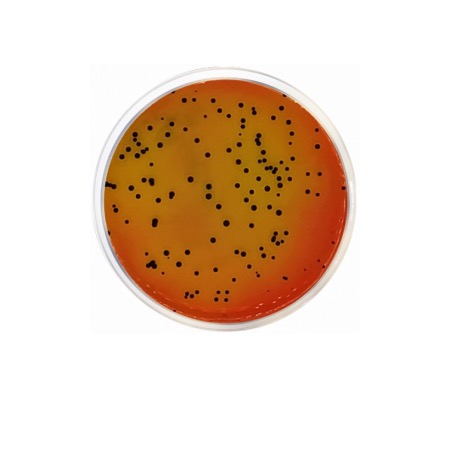
The medium is a nutrient-rich broth with a low agar concentration, providing a semisolid consistency. The Proteose Peptone provides nitrogen, vitamins, and amino acids necessary for bacterial growth. Glucose acts as the fermentable carbohydrate and the substrate for the production of organic acids and neutral end-products. Sodium Chloride maintains the osmotic balance required for the stability of Vibrio species. The semisolid nature of the medium (due to a low concentration of Bacteriological Agar) helps in maintaining a localized environment for metabolic reactions. In the presence of oxygen and strong alkali (KOH), any acetoin produced is oxidized to diacetyl, which reacts with creatine or alpha-naphthol to produce a red/pink color—indicating a positive VP reaction.
Advantages
- Optimized for Vibrio: Specifically formulated to support the metabolic requirements of Vibrio cholerae.
- Clear Differentiation: Provides a reliable environment for the biochemical differentiation of Vibrio species based on acetoin production.
- Semisolid Consistency: The low agar content aids in stabilizing the culture and localizing metabolic byproducts.
- Essential for Identification: A key component in the traditional biochemical characterization of enteric and waterborne pathogens.
- Easy Interpretation: When used with VP reagents, it yields a high-contrast color change that is easy to read.
Technical specifications
| Catalogue number |
1392 |
| Brand |
Condalab |
| Application |
Identification of Vibrio cholerae (VP Test) |
| Typical Composition (g/L) |
Proteose Peptone (7.0); Glucose (5.0); Sodium Chloride (15.0); Bacteriological Agar (4.0) |
| Final pH (at 25 °C) |
7.2 ± 0.2 |
| Preparation |
31.0 g/L |
| Storage Temperature |
2 – 25 °C |
Available packaging options
| 1392 |
500 g plastic bottle |