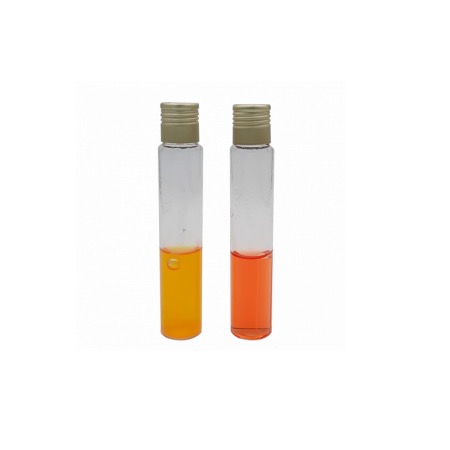
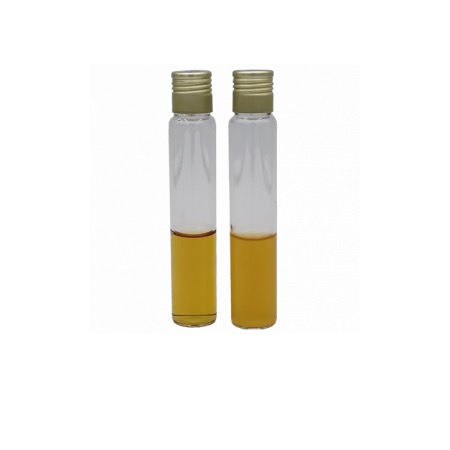
The medium contains Casein Peptone and Sodium Chloride, which provide the essential nutrients and osmotic balance for the growth of many bacterial species. Phenol Red is included as the pH indicator; it is red-orange at a neutral pH (7.4) and turns distinctively yellow when the pH drops below 6.8 due to the fermentation of the added carbohydrate and the subsequent production of organic acids. If the microorganism does not ferment the specific carbohydrate but instead utilizes the peptones, the medium may turn a darker red or pink (alkaline reaction). This base is free of fermentable sugars, allowing researchers to customize the medium by adding the specific carbohydrate (e.g., Glucose, Lactose, Sucrose) required for the identification of a particular isolate.
Advantages
- Highly Versatile: Can be used with any carbohydrate of interest to create a customized fermentation test.
- Clear Visual Interpretation: The sharp color change of Phenol Red makes identifying positive fermentation reactions simple and reliable.
- Accurate Differentiation: Helps in the classification of Enterobacteriaceae and other Gram-negative rods based on their biochemical profiles.
- Gas Detection: Ideal for use with Durham tubes to monitor for the evolution of gas (CO2 and H2) during the fermentation process.
- Standardized Base: Ensures that results are only dependent on the metabolic activity of the carbohydrate added.
Technical specifications
| Catalogue number |
1115 |
| Brand |
Condalab |
| Application |
Biochemical differentiation / Carbohydrate fermentation |
| Typical Composition (g/L) |
Casein Peptone (10.0); Sodium Chloride (5.0); Phenol Red (0.018) |
| Final pH (at 25 °C) |
7.4 ± 0.2 |
| Preparation |
15.0 g/L |
| Storage Temperature |
2 – 25 °C |
Available packaging options
| 1115 |
500 g plastic bottle |