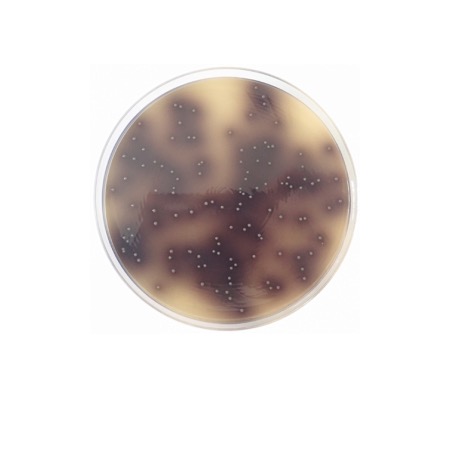
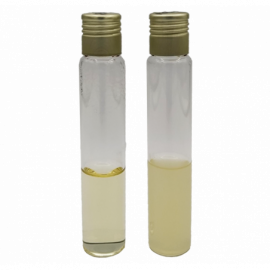
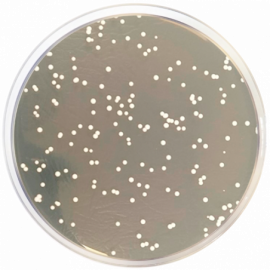
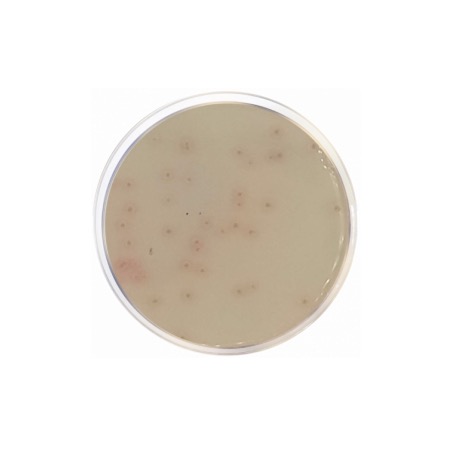
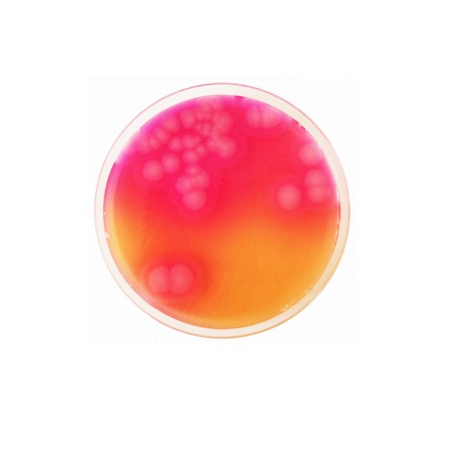
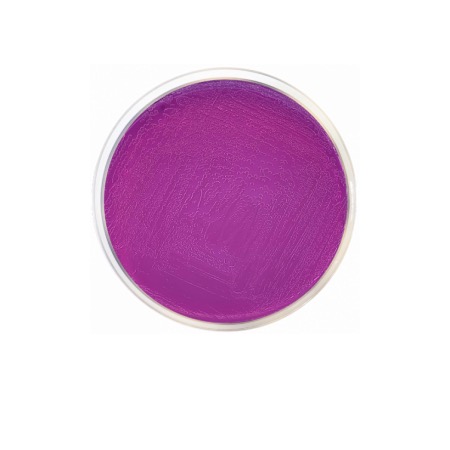
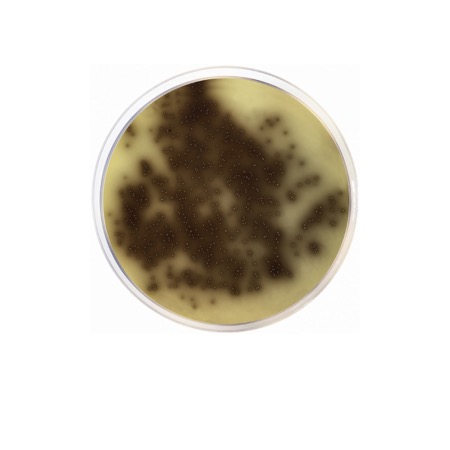
This medium is designed to identify Enterococci by their ability to grow in the presence of bile and sodium azide while hydrolyzing esculin. Tryptone and Peptone provide the essential nitrogen, vitamins, and minerals. Yeast Extract serves as a rich source of B-complex vitamins to stimulate growth. The selective components include Ox Bile, which inhibits most Gram-positive bacteria, and Sodium Azide, which suppresses Gram-negative flora. Differentiation occurs when Enterococci hydrolyze Esculin into glucose and esculetin; the latter reacts with Ferric Ammonium Citrate to form a dark brown or black complex, causing the colonies and the surrounding medium to turn black.
Advantages
- ISO 7899-2 Compliance: Specifically formulated to meet international standards for the microbiological analysis of water.
- High Selectivity: Effectively inhibits the growth of non-target organisms, ensuring that black colonies are highly indicative of intestinal enterococci.
- Membrane Filtration Compatible: Optimized for use as a confirmatory medium after primary isolation on Slanetz-Bartley Agar (Cat. 1109).
- Stable Diagnostic Reaction: The blackening indicator provides a sharp contrast, making colony counting and identification straightforward.
- Critical for Public Health: Essential for detecting fecal contamination in drinking water, swimming pools, and environmental water sources.
Technical specifications
| Catalogue number |
1005 |
| Brand |
Condalab |
| Application |
Enumeration and identification of Enterococci in water (ISO 7899-2) |
| Typical Composition (g/L) |
Tryptone (17.0); Peptone (3.0); Yeast Extract (5.0); Ox Bile (10.0); Sodium Chloride (5.0); Esculin (1.0); Ferric Ammonium Citrate (0.5); Sodium Azide (0.15); Bacteriological Agar (15.0) |
| Final pH (at 25 °C) |
7.1 ± 0.2 |
| Preparation |
56.65 g/L |
| Storage Temperature |
2 – 25 °C |
Available packaging options
| 1005 |
500 g plastic bottle |