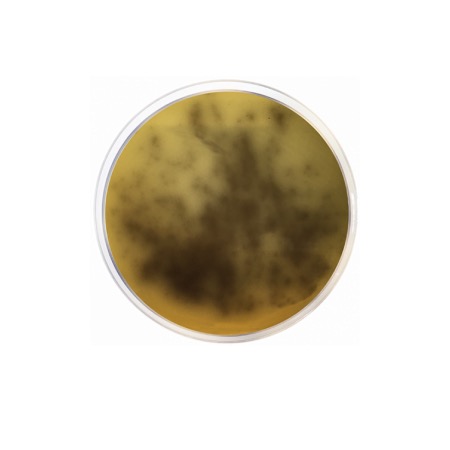
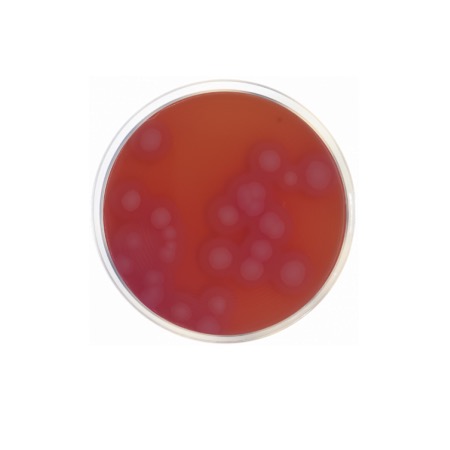
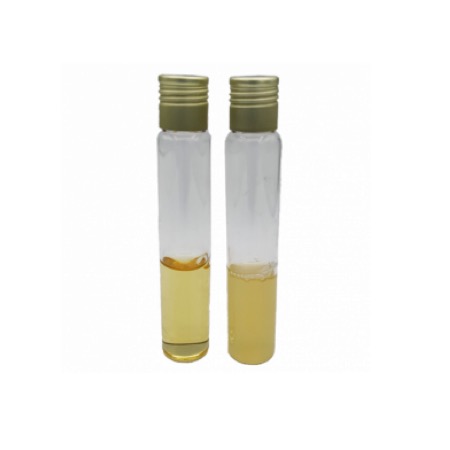
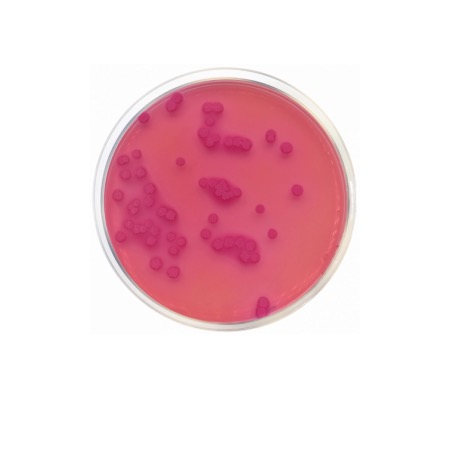
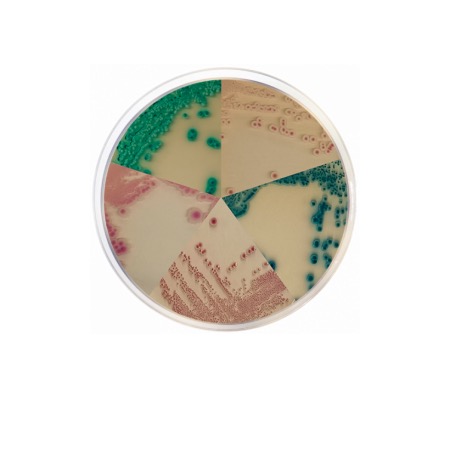
This medium is based on the ability of certain bacteria to hydrolyze Esculin in the presence of Bile Salts. When Enterococci or Group D Streptococci hydrolyze esculin, they produce esculetin and dextrose. The esculetin reacts with Ferric Ammonium Citrate (the indicator) to form a dark brown or black complex, which blackens the medium around the colonies. The high concentration of Bile Salts inhibits most other Gram-positive bacteria, while Sodium Azide (in some formulations) or the selective nature of the bile itself suppresses many Gram-negative organisms. This combination of selectivity and clear biochemical signaling makes it a robust tool for identifying fecal contamination.
Advantages
- ISO Standard Compliance: Meets the requirements for international testing protocols for food and water quality.
- High Differentiation: Provides a distinct visual color change (blackening) for positive identification of esculin-hydrolyzing organisms.
- Strong Selectivity: Effectively inhibits the growth of most accompanying flora, including non-Group D Streptococci.
- Dual Purpose: Can be used as a primary isolation medium or as a confirmatory test for suspected Enterococcus colonies.
- Stable Results: The ferric complex is very stable, allowing for easy reading even after extended incubation.
Technical specifications
| Catalogue number |
1031 |
| Brand |
Condalab |
| Application |
Isolation and identification of Group D Streptococci/Enterococci |
| Typical Composition (g/L) |
Peptone (8.0); Bile Salts (20.0); Esculin (1.0); Ferric Ammonium Citrate (0.5); Bacteriological Agar (15.0); Sodium Chloride (5.0); Meat Extract (15.0) |
| Final pH (at 25 °C) |
6.6 ± 0.2 |
| Preparation |
64.5 g/L |
| Storage Temperature |
2 – 25 °C |
Available packaging options
| 1031-500G |
500 g plastic bottle |